
Key Takeaways:
Spring is the most critical time of year to inspect a pool for damage, as winter conditions and months of inactivity commonly cause or worsen a range of issues across surfaces, equipment and surrounding structures. The most frequent spring pool repairs involve plaster and surface damage, pump and filter failures, water leaks, and deteriorating coping, tile and decking. Catching these repairs early prevents minor issues from becoming major structural or equipment failures, and addressing them before peak swimming season reduces both costs and scheduling delays.
The off-season can often cause damage to your pool that isn’t obvious until something fails or gets worse during the summer. Surface cracks, slow leaks, worn equipment and deteriorating decking are typical issues found when spring pool opening maintenance is performed. If these pool repairs aren’t made until later in the summer, they can become more involved and expensive. Knowing what to look for before the season starts is the most reliable way to avoid those larger repair bills later.
Pool plaster takes a beating over time, and the end of winter is typically when that wear shows itself most clearly. Fine, spiderweb-like cracks (called crazing) are common and usually cosmetic, caused by surface shrinkage as the plaster ages. While they don’t necessarily point to structural problems, they create rough spots that are harder to clean and can irritate your skin.
Delamination is a more serious issue which occurs when the plaster begins to separate from the pool shell. Tapping on a delaminated area produces a hollow sound, and in more advanced cases you’ll see visible bubbling or lifting. Once water gets behind the plaster layer, the damage accelerates quickly.
Staining is another common spring issue, particularly in Atlanta where pollen season is among the worst in the country. Organic debris that sits in pool water over the winter leaves stains that range from mild discoloration to deep, set-in marks. Treatment depends on the stain type and severity, from chemical applications to acid washing. If the plaster surface feels rough or abrasive overall rather than just in spots, that’s usually a sign of etching from prolonged exposure to improperly balanced water chemistry, and it often means pool resurfacing is the appropriate fix rather than spot treatment.
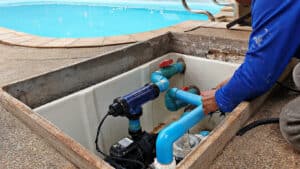 Pool equipment typically isn’t run during the off-season, and components that were already showing wear can fail outright once the system is powered back up. The pump is the most important thing to evaluate first. Listen for grinding or unusual noises when you initially run it, check for visible leaks around the housing, and confirm it’s priming correctly. Seals and O-rings are frequent failure points after months of temperature fluctuations.
Filters also need attention regardless of type. Sand, cartridge and DE (diatomaceous earth) filters all benefit from cleaning or media replacement at the start of the season. A compromised filter struggles to remove debris and contaminants effectively, which affects water clarity and water safety. If you have a sand filter, make sure to check for broken laterals inside the tank, since they allow sand to pass directly into the pool.
Pool heaters can develop internal corrosion when they sit unused all winter. The first time you run the heater in spring, watch for error codes, inconsistent output or unusual smells. Heat exchangers are a particularly common failure point and are expensive to replace when the problem isn’t caught early. If your pool has an automated control system, run through all functions to confirm that timers, sensors and circuit boards are responding correctly, as moisture and temperature swings over the winter can affect these components.
One thing worth noting: a pump or filter that’s running but underperforming is still a problem. A system working harder than it should to circulate water wastes energy and tends to fail sooner than one that’s been properly maintained.
If your pool’s water levels are dropping more than roughly a quarter inch per day, it’s typically a sign that you have a leak. The bucket test is a simple way to check:
If the pool has lost noticeably more water than the bucket, you’re dealing with a leak rather than evaporation.
Pool leaks most commonly occur at plumbing fittings, around return jets and skimmers, through cracks in the shell, or around underwater light fixtures. Identifying the exact source typically requires pressure testing the plumbing lines, which isn’t a DIY job. Guessing at the location and patching the wrong spot wastes time and often allows the actual leak to worsen in the meantime.
Structural cracks are a separate concern from the cosmetic surface cracks discussed earlier. Cracks that are wide, deep or following stress lines in the shell need to be evaluated by a professional pool repair company. Untreated structural cracks allow water to work into the surrounding soil, which erodes the ground supporting the pool and can eventually lead to far more significant and expensive structural problems.
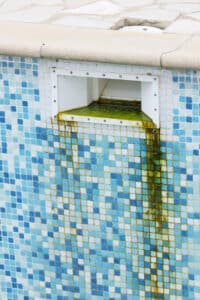 Coping, the cap material that runs along the top edge of the pool wall, is particularly susceptible to freeze-thaw cycles. Even the relatively mild winters Atlanta experiences can crack coping or loosen it from the pool’s structural wall. Loose or cracked coping is a safety concern for anyone walking around the pool, and these gaps allow water to get behind the pool wall.
The waterline tile takes constant abuse from fluctuating water levels, chemical exposure and debris. It’s common to find cracked or missing tiles and deteriorating grout after winter. This is worth addressing promptly because the exposed shell behind damaged tile is vulnerable to water damage that compounds over time.
Decking, whether poured concrete or pavers, expands and contracts with temperature changes. This leads to cracking, lifting and joint separation. Damaged decking around a pool is a trip hazard and should be repaired before the pool is in regular use. Look for lifted pavers, cracks wider than a hairline and sections of deck that have shifted or settled unevenly.
Spring is the ideal time to make these repairs so that your pool will be ready to go when the hot weather returns. Getting inspections and any needed pool repairs done during the spring will help you avoid the scheduling challenges that typically occur during peak season. It also allows adequate cure time for structural repairs and resurfacing work before the pool is filled and balanced.
Pool repairs that get pushed into the summer rarely stay contained. A small leak continues eroding the surrounding soil. A filter running on degraded media keeps the water chemistry harder to manage. Surface damage that might have been a straightforward fix before pool season can require a more involved repair by mid-summer. Identifying and addressing these items in the spring before you’re regularly using your pool will prevent larger, more expensive problems from developing.
At Allen Pool Service, we’ve been Atlanta’s leading pool company since 1972. Our team of highly skilled and experienced technicians can assist with all your spring pool opening maintenance tasks to ensure they’re handled correctly. They’ll also inspect your pool to identify any potential issues that might require repair before season starts. You’ll have peace of mind that all repairs are being performed according to industry best practices and will keep your pool in great condition all summer long.
Contact us today to schedule an appointment. Allen Pool serves clients in Atlanta and the surrounding areas.
Please call (770) 451-1621 to for pool renovation, service, and winterization by Allen Pool Service in Atlanta.
Request Now